
Structural Engineer Ireland Chartered Structural & Civil Engineering Services
Whether you are buying a house and want it properly surveyed, extending your home and need a structural design, dealing with cracks in your walls, or managing a commercial development, Banrach Consulting Engineers provide the structural and civil engineering expertise you need in across Ireland.
We are Chartered Engineers, members of Engineers Ireland, with broad experience across residential, commercial, and civil engineering projects. Our work ranges from single-house structural surveys and extension designs to multi-storey commercial structures and civil infrastructure. We bring the same professional rigour to a structural report for a house purchase as we do to the design of a complex commercial building.
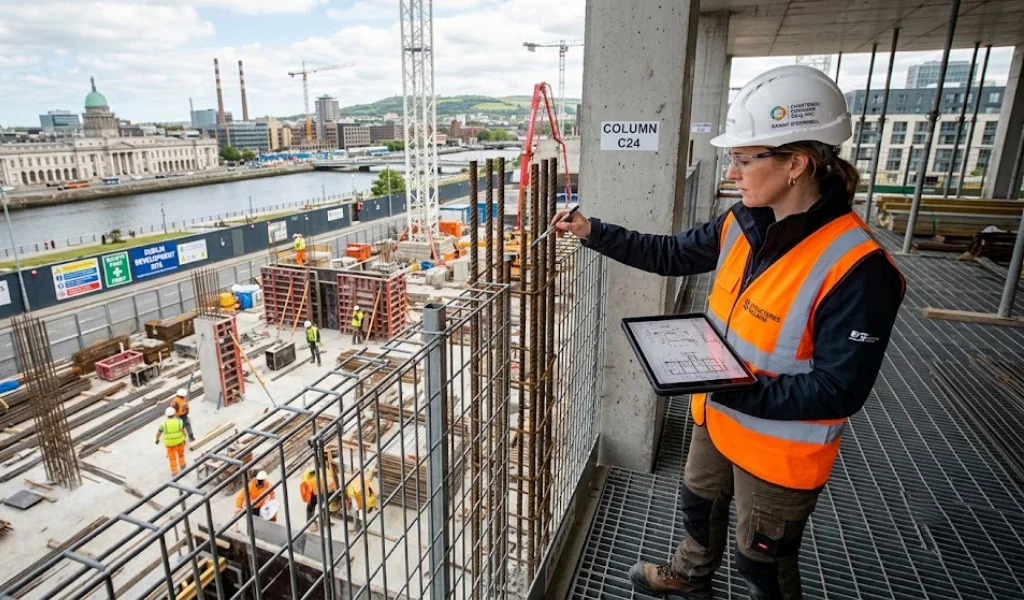
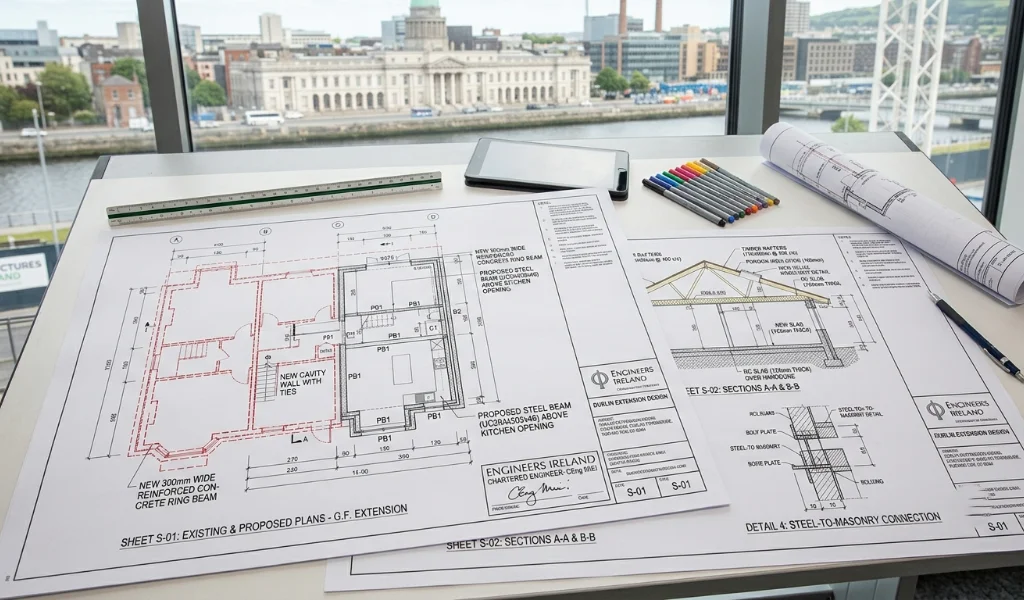
When You Need a Structural Engineer
A structural engineer's input is required, or strongly advised, in several common situations:
- Buying a house: a pre-purchase structural survey identifies issues before you are legally committed, and covers what a general property survey does not
- Planning an extension or conversion: foundation design, beam and lintel schedules, and structural drawings are needed for planning and building control
- Noticing cracking or movement: diagonal cracks, sticking doors, or sloping floors all warrant a professional structural assessment
- Removing a wall: any load bearing wall requires a structural engineer to design the replacement support before work begins
- Building control compliance: staged inspections and a final Certificate of Compliance are required for most extensions and new structures
- Disputes or insurance claims: an independent Chartered Engineer's report provides the technical basis for negotiation or a claim
Not every property issue needs an engineer. Cosmetic cracking, general maintenance items, and services faults are dealt with by other trades. The list above covers the situations where structural expertise, and Chartered sign off, genuinely matters.
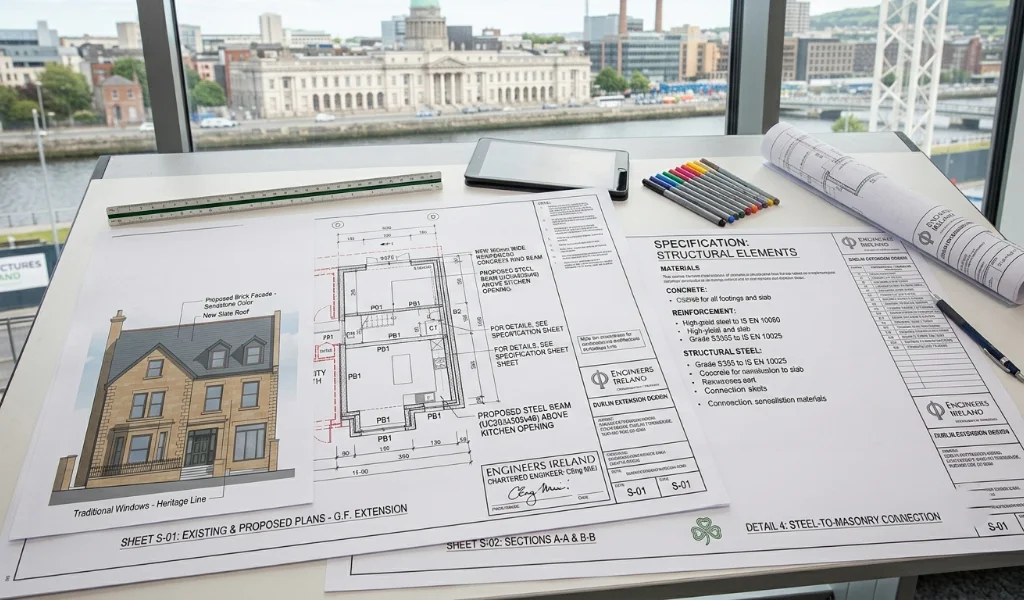
The Banrach Process
- Stage 1: Site Visit A Chartered Structural Engineer visits the property, inspects the relevant elements, and discusses your requirements, whether that is a purchase decision, an extension, or a concern you want assessed.
- Stage 2: Report or Design Depending on the brief, we issue a written structural report setting out our findings, or produce structural drawings and calculations ready for planning and building control submission.
- Stage 3: Planning and Building Control Where design work is involved, we liaise with your architect, contractor, and the local authority so the structural elements meet planning conditions and building regulations.
- Stage 4: Inspection and Sign Off During construction, we carry out staged inspections and issue a Certificate of Compliance on completion, the document required by building control, lenders, and future buyers.
Our Structural Engineering Services in Ireland
| Service | What It Involves | Who Needs It |
|---|---|---|
| Structural Survey (Pre-Purchase) | Full structural inspection of a property before purchase; written report with findings and recommendations | Home buyers, commercial property purchasers, solicitors |
| Structural Design for Extensions | Foundation design, beam sizing, structural drawings for planning permission and building control | Homeowners extending; architects needing structural input |
| Structural Reports for Planning | Structural feasibility, condition, or assessment reports required by planning authorities | Developers, architects, planning applicants |
| Subsidence Investigation | Site investigation, crack survey, monitoring, and Chartered Engineer's report | Homeowners, commercial owners, insurers, loss adjusters |
| Remedial Works Design | Specification and supervision of underpinning, crack repair, lintel replacement, structural remediation | Homeowners, contractors, insurers |
| Civil Engineering | Drainage design, site development, road design, flood risk assessment, civil infrastructure | Developers, local authorities, contractors |
| Party Wall / Boundary | Party wall assessments, boundary structure reports, neighbour dispute technical advice | Homeowners, solicitors, property managers |
| Structural Certification | Sign-off on completion of structural works; certificate of compliance | Contractors, solicitors, mortgage lenders |
Chartered Structural Engineer vs General Structural Engineer
Not every engineer offering structural services in Ireland holds Chartered status. The table below sets out why it matters.
| Requirement | Chartered Structural Engineer | Non Chartered Engineer |
|---|---|---|
| Mortgage lender sign off | Accepted | Often not accepted |
| Building control (BCMS) certification | Accepted | May not meet requirements |
| Insurance company reports | Accepted by major Irish insurers | May be rejected or require review |
| Professional accreditation | Engineers Ireland (CEng), formal peer review and CPD | Varies, no equivalent formal assessment |
It is worth confirming an engineer's Chartered status with Engineers Ireland before instructing them, particularly for planning, building control, or lender related work.
Why Choose Banrach for Structural Engineering in Ireland?
- Chartered Engineers Ireland Banrach's engineers hold Chartered Engineer (CEng) status as members of Engineers Ireland. Chartered status is the highest professional qualification in engineering in Ireland. It requires a combination of academic qualifications, structured professional development, experience under a mentor, and a competence assessment. For most applications, building control sign-off, mortgage lender requirements, planning reports, only a Chartered Engineer's certification is accepted.
- Both Structural and Civil Engineering Many practices are either structural or civil engineering specialists. Banrach offers both disciplines in-house. This is valuable for projects that cross the boundary between structural (the building) and civil (the ground, drainage, and site) house extensions with drainage implications, site developments, flood-risk assessments for planning, and new-build domestic projects where foundation design and site drainage need to be coordinated.
- Subsidence Specialism Banrach has significant experience in subsidence investigation and insurance-related engineering work. This is an area requiring specific expertise, and not every structural engineer has it. Our experience in this niche means we understand the documentation requirements for insurance claims, the monitoring protocols accepted by major Irish insurers, and the format in which a Chartered Structural Engineer's Report needs to be written to be acted on.
- Dublin-Based We are based in Dublin and operate primarily across the greater Dublin area and the Leinster region. Our local knowledge of Dublin's clay soils, the Victorian and Edwardian housing stock that makes up much of the city's residential property, and the local authority planning and building control requirements is directly relevant to the quality and relevance of our engineering advice.
Structural Engineering for Home Buyers in Ireland
Buying a house in Ireland is one of the largest financial commitments most people make. The standard property surveyor's report (a HomeBond survey or SCSI condition report) does not cover structural engineering. It is a general condition report, not a structural assessment. If a property has visible cracking, has been extended, or is an older building with potentially complex foundation conditions, a structural engineer's input adds a layer of certainty that a general survey cannot provide.
Banrach provides structural surveys for home buyers that cover:
- All visible cracking structural assessment and significance
- Structural condition of walls, floors, and roof structure
- Assessment of extensions whether structurally sound and consistent with building regulations
- Drainage: visible drainage condition and any signs of drainage-related structural issues
- Specific structural concerns flagged in the general property survey
- Recommendations for further investigation where warranted
Our structural survey report is written to be understood by a non-engineer clearly identifying what requires attention, what is cosmetic, and what is beyond the scope of the survey.
Structural Engineering for Home Extensions in Ireland
Planning permission for a house extension in Ireland generally requires structural drawings from a Chartered Structural Engineer. Building control sign-off (Commencement Notice and BCMS Certificate of Compliance) also requires a Chartered Engineer's involvement. Banrach provides the complete structural engineering input for home extensions in Ireland:
- Structural feasibility assessment: can the extension be built as planned, given the existing structure?
- Foundation design what type of foundation is required, and at what depth?
- Structural drawings for planning wall sections, beam schedules, structural details
- Building control inspection and sign-off during construction
- Certificate of Compliance on completion

Civil Engineering Services in Dublin
Banrach's civil engineering capability covers site development, drainage, roads, and infrastructure. For many projects, particularly residential developments, commercial sites, and planning applications, civil and structural engineering input is required together. Our combined civil and structural capability means clients deal with one practice, not two.
- Site drainage design surface water, foul water, and combined drainage
- Flood risk assessment required by many Dublin local authorities for planning applications in areas with flood history
- Road and access design private roads, estate roads, visibility splays
- Retaining structures design and supervision of retaining walls, basement structures
- Infrastructure reports condition assessments of existing drainage and civil infrastructure
Who We Work With
- Homeowners Whether you are buying a property, planning an extension, or dealing with cracking or movement, we provide clear, plain language reports written for non engineers.
- Architects & Contractors We work alongside design teams on extensions, conversions, and new builds, providing structural drawings, calculations, and site inspections through to completion.
- Solicitors & Conveyancers Property transactions often need a structural opinion on a specific issue, or a certificate confirming that past works were carried out to building regulations.
- Developers & Commercial Clients Offices, retail units, and multi unit developments require structural input at every stage, from feasibility through to building control sign off.
Frequently Asked Questions
-
Do I need a structural engineer or an architect for a house extension in Ireland?
You need both for most Dublin Ireland extensions. The architect designs the extension and manages the planning application. The structural engineer designs the structural elements (foundations, beams, steelwork) and provides the structural drawings required for planning and building control. Banrach works alongside architects on many projects. -
How long does a structural survey take?
A structural survey of a standard three- or four-bedroom house in Dublin typically takes two to three hours on site, with the written report delivered within five to seven working days. -
Can you provide a structural report for mortgage or planning purposes?
Yes. Banrach's Chartered Structural Engineers provide reports accepted by all major Irish mortgage lenders, local authority building control departments, and planning authorities. Reports are signed by a named Chartered Engineer and carry the Engineers Ireland crest.
Need a Structural Engineer in Ireland? Contact Banrach
Banrach Consulting Engineers are Chartered Structural and Civil Engineers based in Ireland. Contact us for structural surveys, extension design, subsidence investigation, or any structural or civil engineering requirement across Dublin and Ireland.