
Underpinning & Subsidence Repair: What Actually Happens
Underpinning is the process of strengthening and extending a building's foundations down to stable ground, used to permanently repair subsidence where the foundations have moved. The main methods are mass concrete underpinning, beam and base, and piled underpinning, with resin injection available as a less invasive option in some cases. It always follows an engineering investigation that first confirms the cause.
This guide explains what underpinning actually involves: the methods used to permanently repair subsidence, how they differ, and the step by step process an engineer follows, from the first site investigation through to a finished, stabilised foundation.
What Is Underpinning?
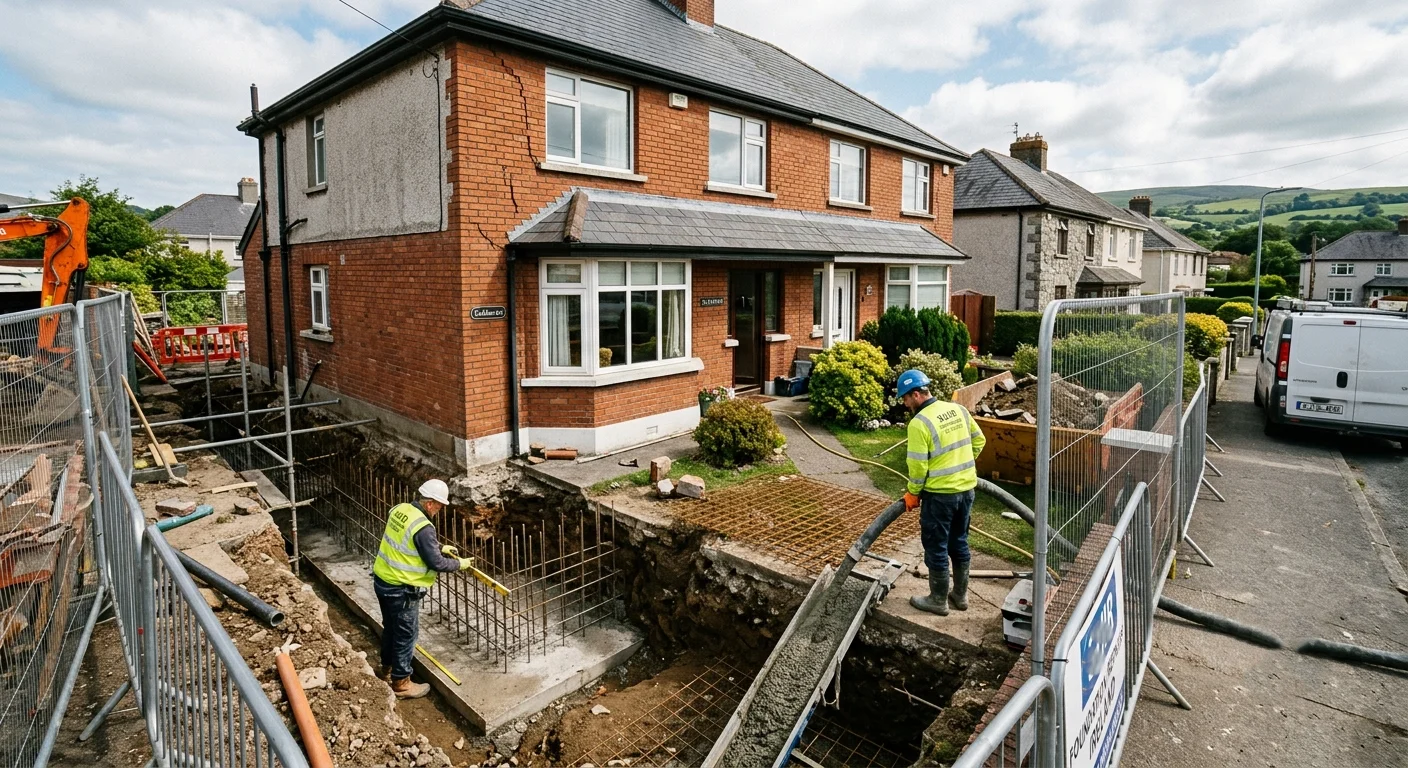
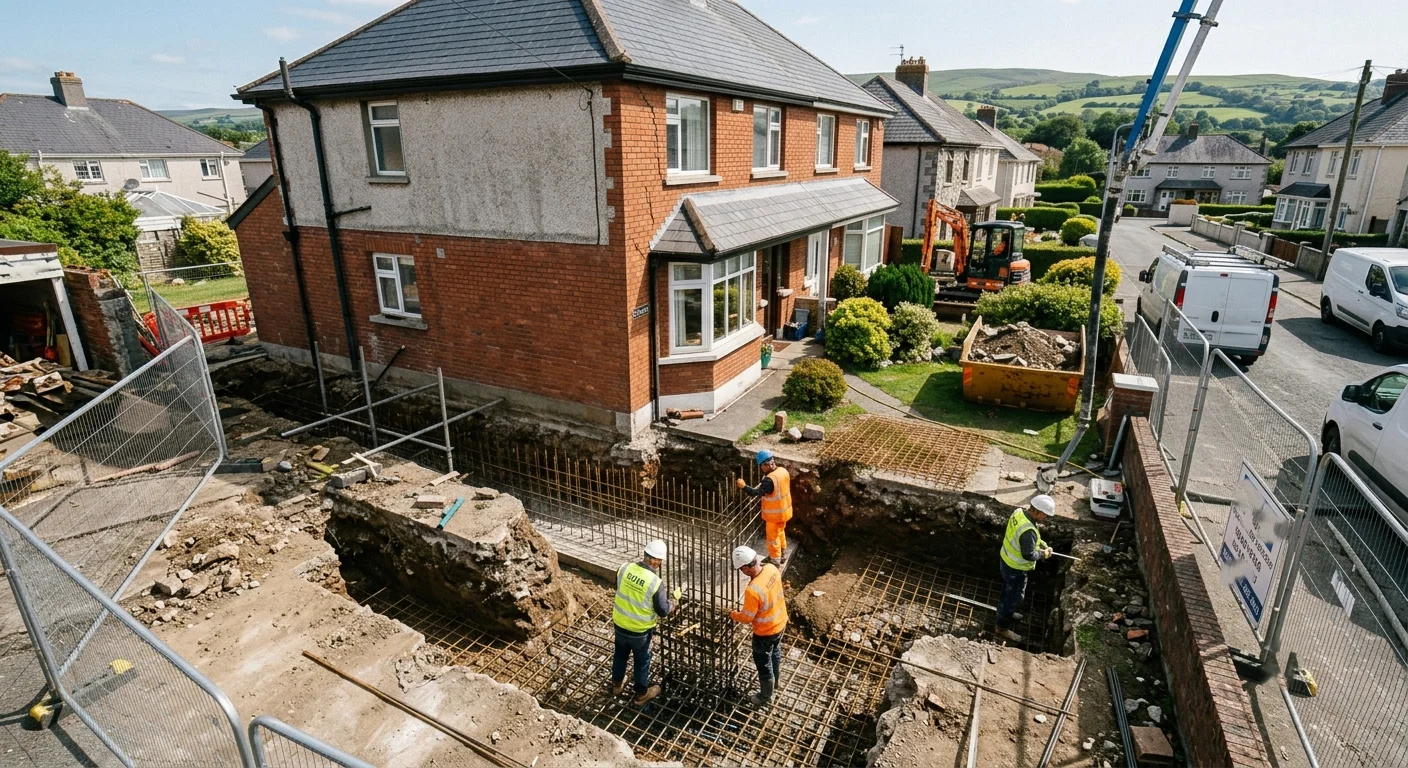
When subsidence has caused a building's foundations to move, the permanent fix is usually to strengthen and extend those foundations down to sound, stable ground. This is underpinning. It transfers the load of the building to a level that will not move, stabilising the structure for good. Underpinning is significant structural work, and it should only be carried out to an engineer's design after the cause of the subsidence has been properly diagnosed.
The Main Underpinning Methods
| Method | How It Works | Best For |
|---|---|---|
| Mass concrete | Excavated in sequence beneath the footing and filled with concrete down to a deeper, stable stratum | Shallow, straightforward cases; traditional and reliable |
| Beam and base | A reinforced concrete beam spreads the building's load onto new bases or piers | Where load needs redistributing over softer ground |
| Piled underpinning | Mini-piles are driven down to deep, stable strata and tied to the structure with beams | Deeper unstable ground; restricted access |
| Resin injection | Geopolymer resin is injected to fill voids beneath the foundation and re-level it | Lighter cases suited to a less invasive approach |
The Subsidence Repair Process, Step by Step
- 1. Structural Engineering Investigation A Chartered Structural Engineer inspects the building, assesses the crack pattern and movement, and, where needed, arranges trial pits, level surveys, or a CCTV drain survey to establish what is actually happening beneath the foundation.
- 2. Confirming the Cause The investigation identifies whether the movement is due to clay shrinkage from tree roots, a leaking drain eroding the sub base, poor fill, overloading, or another cause. Repair cannot be properly designed until the cause is confirmed.
- 3. Addressing the Cause Wherever possible, the cause is removed or controlled first: managing or removing a problem tree, repairing or relining a leaking drain, or improving drainage around the foundation. In many cases this alone stops further movement.
- 4. Monitoring Once the cause has been addressed, movement is often monitored over a period of months to confirm it has stopped before any permanent structural repair is specified. Monitoring avoids unnecessary and invasive work.
- 5. Designing the Repair, If Needed If the foundations have moved and stabilisation is still required after the cause is addressed, the engineer specifies the appropriate method, mass concrete, beam and base, piled underpinning, or resin injection, based on ground conditions, depth, and access.
- 6. Carrying Out the Repair The specified repair is carried out to the engineer's design, usually in short excavated sections beneath the existing footing so the building's structural integrity is maintained throughout the works.
- 7. Sign-Off and Aftercare Once complete, the engineer inspects and signs off the finished works, and internal repairs such as replastering and redecorating can proceed with confidence that the underlying cause has been dealt with.
Underpinning is a specialist structural solution used to strengthen or deepen existing foundations when ground conditions or structural movement affect a property. For guidance on structural design and construction standards in Ireland, see the NSAI Eurocodes, which provide the framework for structural and geotechnical design in Ireland.
Underpinning FAQs
-
What is underpinning a house?
Underpinning strengthens and extends a building's foundations down to stable ground to permanently stabilise it, most often after subsidence. It is carried out to an engineer's design and follows a proper investigation of the cause. -
How is subsidence repaired?
By first removing the cause, managing trees or repairing drains, and then, where the foundations have moved and movement continues, strengthening them, often by underpinning. Not every case needs underpinning; the engineer specifies the right remedy. -
How much does underpinning cost?
It varies widely with the method, depth, access, and extent of the work, so it is priced after an engineering assessment. Where subsidence is insured, much of it may be covered. See our subsidence cost page and talk to us about your property. -
Does every subsidence problem need underpinning?
No. Many are resolved by addressing the cause and monitoring, with no underpinning required. Underpinning is used where the foundations have moved and need permanent support, and the engineer's investigation determines whether it is necessary.
Get a Subsidence Repair Assessment
Have a crack in your wall or signs of subsidence? Banrach Consulting Engineers are Chartered Structural Engineers based in Dublin, specialising in subsidence investigation and repair, from diagnosis through to underpinning.